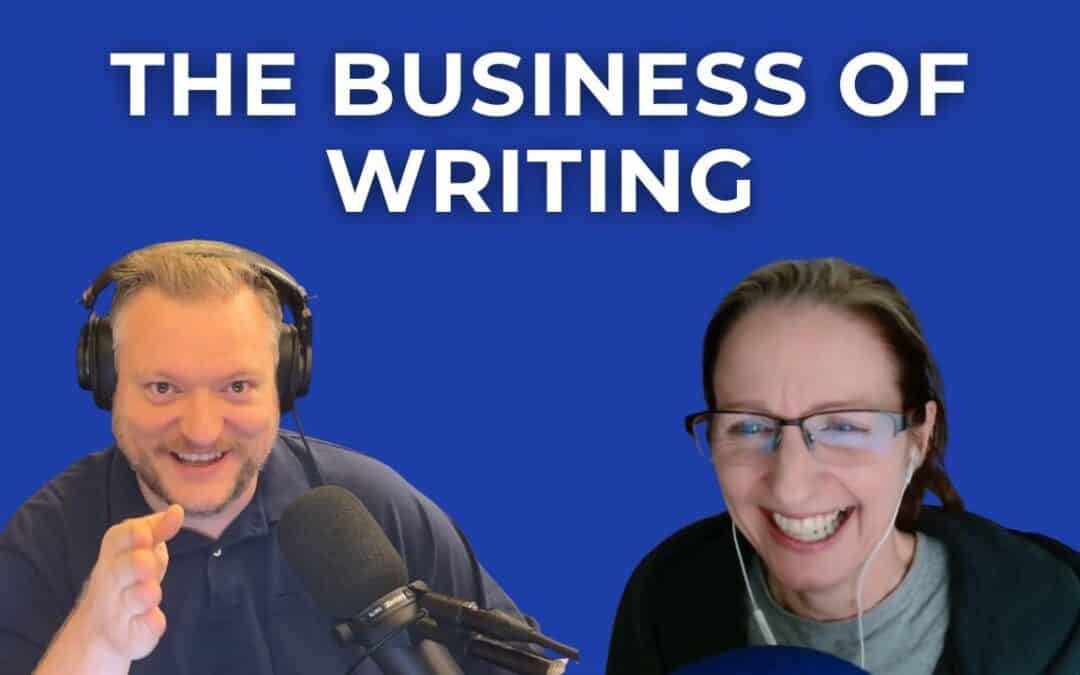

Is your writing a hobby or a profession? Your answer to that question changes everything.
Most authors say they are professional authors, but they still act like hobbyists.
- They write the books they want to write rather than the books readers want to pay for.
- They ask what genre the book they already wrote fits into, instead of studying a genre first and then writing a book to appeal to those genre fans.
- They publish their book without a marketing plan, and often without spending any money on marketing. Then they are shocked when only a handful of people buy it, and even fewer leave reviews.
They grow frustrated with their sales numbers because while they are acting like hobbyists, they are expecting professional results.
If this sounds familiar, I have good news. There is a different path: the professional path.
What makes an author a professional?
Thomas: Professional authors treat writing like a business. They view readers as customers and view the book as a product meant to thrill those customers.
If that framing makes you uncomfortable, it is okay to be a hobbyist. If you write for self-fulfillment, your book is a success as long as you find it fulfilling. Books do not need to sell to be fulfilling, but they do need to sell to pay the bills.
If you want to be a hobbyist, this episode is not for you. In this interview, we’ll discuss how to become a professional author with a business that can sustain you for decades.
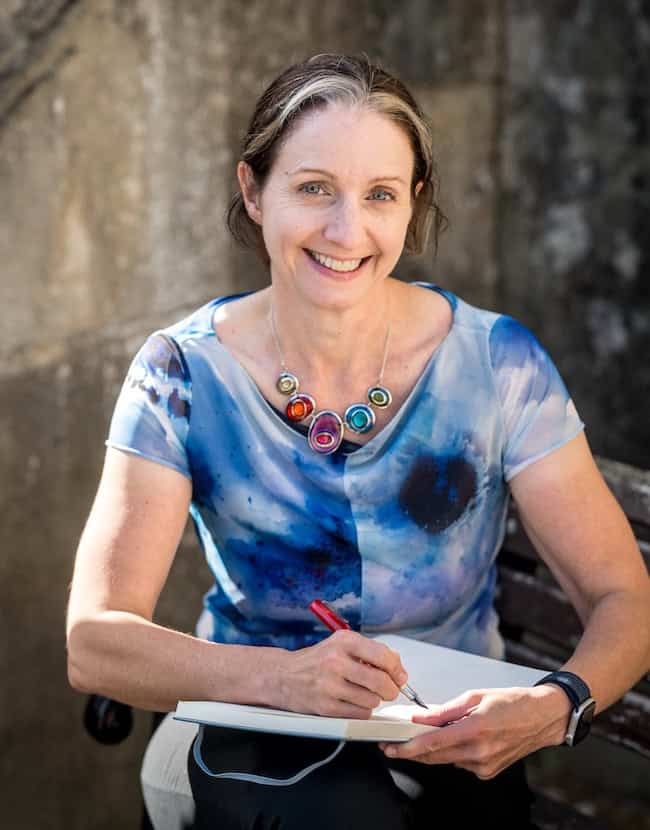
To explore that shift, I asked an author and podcaster who has been helping authors thrive even longer than I have. Joanna Penn is a friend of the show, an award-winning writer, a New York Times bestselling author, and host of The Creative Penn, now the longest-running indie publishing podcast in the world.
When should authors start thinking like a professional?
Joanna: First, your age and stage of life matter, as does your financial situation. Many people come into the writing life in their fifties, sixties, or seventies and think, “I do not need to make a full-time living with my writing.”
When I decided to move into writing as a career, I was thirty-five and wanted it to be a business. I had already been running my own business for about fifteen years. I created a business plan before I had even really written a book.
So, there are two paths. You may be listening and thinking, “I want this to pay my bills. I am determined to make it.” That is one way of approaching it.
The other way is that you start writing a book and catch the bug. You write one book and think, “I love this.” Then you write another, and another. You love writing, reading, and the community. You realize this is long term. At that point, you might start asking whether it should become a business.
If you are in that place, and you have a couple of books and are thinking about making it a business, you should already be making some money. If you are earning $20,000 or more, then you need to consider treating it as a business instead of simply reporting it on your personal tax return.
We should say up front that this is not financial, accounting, or legal advice. I am British and based in the UK. You are American. The details differ. But the attitude matters from the beginning.
I get emails from people at all stages. I had an 85-year-old email me recently asking about marketing. I gently asked, “Do you really want to bother with all of this?” You can write your book and make it beautiful. Yes, you can sell it, but do you want to get into the marketing and business side?
Running a business is a hassle. You have to decide if you want that part of it.
Does age prevent you from becoming professional?
Thomas: Early in my career, I taught at a conference in Hawaii. I was teaching on building websites and marketing. The room was full of people in their sixties and seventies who were complaining about how hard it was.
Meanwhile, there was one older gentleman, a World War II veteran, who was simply doing the work. He was not complaining. Compared to what he had experienced in war, building a website was nothing. Age was not the issue. Mindset was.
Joanna: Exactly. I do not mean to be ageist. It is about financial security and intention. If you have sorted out your investments and your income, then the question becomes whether you intend to make a profit.
Tax authorities, whether the IRS in the United States or HMRC in the UK, ask whether you are intending to make a profit. A business is meant to generate profit. That means keeping books, saving receipts, filing returns, and making business decisions.
There is overhead in running a business. You must do accounting and administration. That is the distinction. It is not about age. It is about what stage of life you are in and whether you want to build income and invest in other assets.
When should you make the shift from hobbyist to professional?
Thomas: You can make this shift at any time. Many authors start as hobbyists and pivot later. Sometimes that happens after tasting success. They make $20,000 and suddenly taxes matter. They realize they need to take it seriously.
Other times, it happens after a layoff or retirement. They look at their savings and think, “I have six months or a year to make this work.”
Consider hobbyist golf versus professional golf. What makes a golfer a professional is not how much they spent on clubs or even how good they are. Some hobbyists are excellent players, but they make more money as CEOs. They do not want the business side of professional golf, with travel, sponsorships, bookkeeping, and obligations.
Writing is similar.
Joanna: I have watched golf documentaries, and I was surprised by how much they do outside of playing golf. They do social media, events, public relations, and personal branding. It is not just about playing the game.
The same is true for writers. We do not just sit and write. If you want a business, you must take money and marketing seriously.
You need to understand your product, customers, sales, distribution, and strategy. One of the biggest errors independent authors make, and I made it myself, is focusing almost entirely on the product.
We love books. We obsess over beautiful covers and special finishes. But we forget to think strategically about customers, sales, and distribution.
It may feel artistic, but a business has the same elements in any industry.
How is a writing business different from other businesses?
Thomas: Some people try to make the writing business seem exotic so they can sell a special secret to authors. It is not that exotic. There are a few industry quirks that a CPA can explain, but the fundamentals of a writing business are standard business principles.
In college, I was working on my first book proposal while taking an entrepreneurship class. I compared the book proposal to the business plan I was required to create for class. They had the same sections, in the same order, for the same purpose. The publishing company deciding whether to invest in your book is evaluating a business plan.
Even in traditional publishing, it is still a business.
Thomas: As a hobbyist, you write whatever you want. A mystery this year, a memoir the next.
As a professional, your name becomes a brand. It has to mean something. Often that means narrowing your focus. Readers want not just any thriller, but a J. F. Penn thriller, with certain themes and elements readers expect.
That requires discipline. It means not writing every book idea that comes to mind if it does not fit the brand you are building.
Should you build a long-term brand or use rapid-release pen names?
Joanna: I agree with the long-term brand approach. However, especially in fiction, some authors use a throwaway pen name strategy. They do rapid release, write-to-market books, and focus on algorithms. I am not that person, but it is an entirely valid business model for fiction authors.
Those are decisions based on your timeframe. Podcasting, for example, is a long-term marketing strategy. It builds close relationships with listeners who care about you. People love the host. That is why they come back. They may get something from the guest, but they are there for you. However, podcasting takes a long time to build a brand and a relationship.
By contrast, paid ads on a write-to-market book can generate money much faster, but they are not necessarily sustainable.
The brand-building approach also gives you leeway to write other things. Under J.F. Penn, I primarily write thrillers, but I’ve also written supernatural horror and a pilgrimage memoir. When I wrote that memoir, I wondered what to do with it. I ran a Kickstarter for what was essentially a religious memoir about walking alone, and it did very well with a segment of my audience because I had built a personal brand.
That book was never going to sell widely for other reasons. It may have some SEO in the title, but it is extremely niche.
We also do not want to shut down creativity. The longer your career continues, the more readers will follow you from genre to subgenre.
I have two author names. Under Joanna Penn, I write craft and business books for authors. It is a different audience and a different website. There is overlap, but it is not 100%. Some readers follow you across genres, and others do not.
You can expand as your business grows. But if you try to do too many things in your first week, month, or year, you will struggle.
Thomas: You earn the right to write memoir as you succeed in your genre. Almost every author eventually tries memoir or children’s books, the same way musicians eventually make a Christmas album. It is never your first album. In fact, it is a mistake if your first album is a Christmas album. You never escape that category in the eyes of listeners.
If your first book is a memoir, it is hard to escape that label. It is also hard to sell. People bought your memoir, Joanna, because they were already curious about you. They knew you from your podcast.
It is interesting that you published it under J.F. Penn rather than Joanna Penn.
Joanna: That was a dilemma. I originally planned to publish it under Joanna Penn but chose J.F. Penn. I am glad I did. My next nonfiction memoir-style book on English Gothic cathedrals will also be under J.F. Penn because those themes underpin my fiction.
To be clear, I am not a Christian author. But themes of faith, churches, architecture, and religion underpin my fiction, so the memoir fit there.
How can Kickstarter work for niche or personal books?
Joanna: From a business perspective, I considered how I could make money with that memoir. It took years to write. I chose Kickstarter because it creates a limited-time campaign. With print-on-demand publishing, very little is truly limited.
I offered bundles with my backlist, which is powerful once you have multiple books. I offered signed copies and made it personal. In an age of AI, personal touches matter. I recorded a very personal video explaining why the book was important and why I was seeking faith during a difficult time. That connection matters.
A Kickstarter sales page is far more involved than an Amazon page. My average order value on Kickstarter is over £40, about $50 US. On Amazon, my average order value is around £4. That is ten times the value. These are super fans.
What are the two main Kickstarter strategies?
Thomas: You might think that $50 per backer only works for Joanna Penn. It does not. Most authors land in the $40 to $60 per backer range. You do not need many backers at $50 each to reach $5,000 or $10,000.
There are two valid Kickstarter approaches.
The first is the MVP, or minimum viable product. This is for a book you have not written yet and are not sure you will write. I used this approach when I wrote my book. I’m not an author per se, but I once wrote a viral blog post that reached a million views, and people urged me to write a book. I put it on Kickstarter and said, “If you raise $10,000, I will write the book.” They did, so I wrote it. At least I knew it would make $10,000.
The second approach is for a book you have already written. You use Kickstarter for preorders and special editions. You might not know how many copies to print or how much demand exists. You can offer signed or premium editions unavailable on Amazon.
If you see a campaign with a $500 goal, it is likely a preorder strategy. If you see $20,000, it is likely an MVP strategy. Do not use a $20,000 goal if you will publish the book regardless. Choose the approach that fits your goal.
Should you launch a Kickstarter campaign before the book is finished?
Joanna: Personally, I would not use the MVP approach. I am a discovery writer and do not plot extensively. I find the book as I write it. I do not always know when I will finish.
My next Kickstarter will be for a novel called Bones of the Deep. It is currently being proofread. I do not like launching until the book is done. I will likely set a modest minimum goal that I know will fund.
This connects to stress. Running an author business can become overwhelming. People think they must do social media, rapid release, Kickstarter, Shopify, Amazon, and more. You do not have to do everything.
With Kickstarter, I run short campaigns. The book is finished. The marketing is prepared and scheduled. I know exactly how it will unfold.
Every platform has rules. You must learn the sales page, formats, and customer behavior. Customers differ across platforms. If you are just starting and have one book, or have not finished your first book, keep it simple.
Amazon is still likely the best place to begin to sell your first book. Learn one platform and then expand.
Right now, there is so much opportunity that authors try to do everything and become paralyzed. Everyone wants to try the new thing whether it’s Substack, Shopify, or Kickstarter. But authors can calm down. Choose what fits your stage and temperament.
Why start with Amazon?
Thomas: We disagree on some things, but we agree that beginning authors should start with Amazon for your first book.
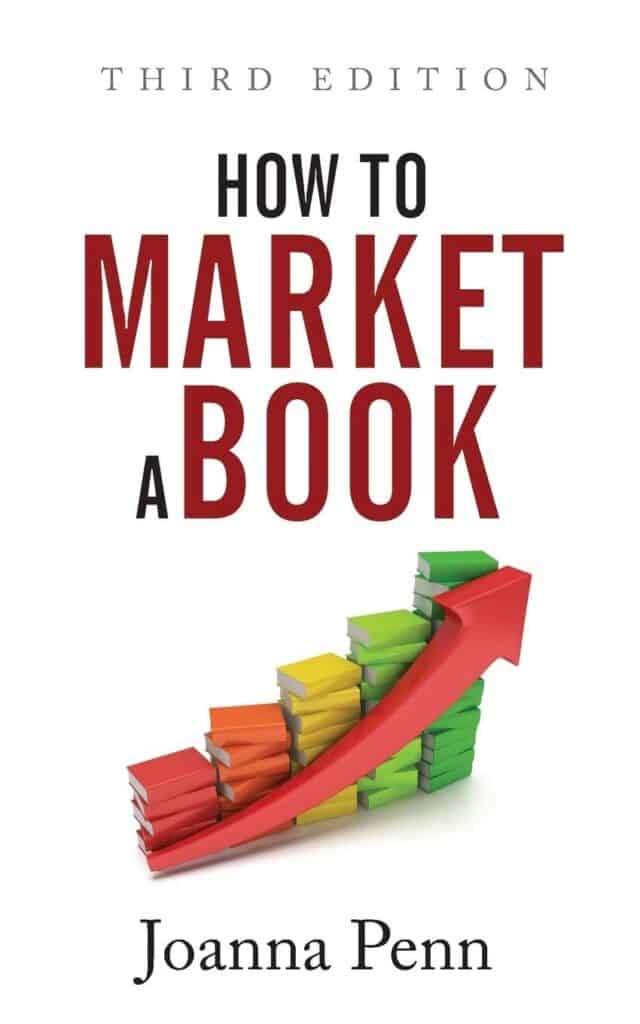
The learning curve for your first book is steep. There are many questions you do not even know to ask. In our Five-Year Plan course, we assign Joanna’s book How to Market a Book (affiliate link) as required reading because new authors need that foundation.
Do not complicate your first launch by splitting distribution between Amazon and IngramSpark, managing multiple ebook platforms, and chasing marginal gains. Amazon represents about 80% of the market. If you sell 100 copies in your first month, the remaining 20% might only mean a handful of additional sales.
You can add complexity later and release a special edition later. Focus first on learning the craft and publishing well.
Many authors realize after a few books that their first book is not their best work. Some even try to pull it back or quietly let it fade. So, start simple, improve your writing, and then expand.
What does a simple marketing plan look like?
Thomas: We talked about keeping marketing simple, and that is critical. A good business plan tells you what to do, but it also gives you permission not to do certain things. It is not about cramming in every possible marketing option.
A simple plan has three parts: attract, engage, convert. You need one way to attract attention, one way to engage interest, and one way to convert. One strategy can do all three. If you have a compelling cover and a clear genre promise, you can run ads. Readers see the cover, recognize the promise, click, and buy. It can be that simple if the book delivers.
We often skip over the product itself. Thinking of a book as a product for a customer requires a mindset shift. Success is not about some abstract ideal of good writing. It is about making a promise readers want and delivering on it.
Different readers want different things. Not everyone wants beautiful sentences or long paragraphs filled with metaphor. Some do. Many do not. Knowing what your reader wants is key.
Who do you serve?
Joanna: Many authors dislike marketing because it feels like selling. Instead of thinking of it as sales, think of it as serving. Who are you serving with your writing?
Narrowing who you serve clarifies what you write. “Thrillers” is a huge category. In my case, readers who enjoy something like Dan Brown are part of my audience for the ARKANE series. But even there, nuance matters.
As a British writer, I grew up hearing far more swearing in everyday speech than the typical American. Yet I knew there was crossover with my American Christian audience, and that language would matter. Americans may tolerate violence, but a swear word can be a deal breaker. So, I removed swearing from my fiction. That is a meaningful constraint.
I also focus more on psychographics than demographics. Political identity, worldview, and values influence what kind of book people want. “Dan Brown readers” is too broad. There are segments within that group.
Serving readers also connects to business structure. In fiction, series matter. If you write five books in five unrelated series, a reader might buy one book and stop. If you write five books in one series, that same reader might buy all five.
This raises a practical question: How much can a reader give you over time? Nonfiction authors often earn more per reader through courses, webinars, events, or consulting. But even fiction writers can think in terms of a product hierarchy.
Many fiction writers supplement income by teaching. In my fiction Kickstarters, I include a discovery writing webinar. You can serve readers in multiple ways, even if you primarily write fiction.
Can creative constraints ruin your art?
Thomas: When you described limiting language for your audience, I could imagine some listeners bristling. They might think, “You are compromising your art!”
That view misunderstands creativity. Constraints make creativity beautiful. Pure white light is not very interesting. But when light passes through a prism and only certain frequencies come through, you see color. Restrictions create color and interest.
Embrace constraints. The business mindset helps you choose which constraints to embrace. If you write for a British audience, you have an enormous vocabulary of swear words. If you write for a broader or American audience, you might limit that vocabulary.
I call this “knowing your Timothy.” It comes from the business practice of creating a customer persona. Early on when I was consulting for authors, novelists would invent fictional reader personas who conveniently loved everything they wrote. That was not helpful.
Instead, I encourage authors to find a real reader. You know your target reader is real when you can say, “My Timothy’s name is…” and name an actual human being who loves supernatural thrillers. Write for that person. If you can thrill one real reader, you can thrill many. There is no such thing as “everyone.” The more focused you are, the more you sell.
How can AI help clarify who you serve?
Joanna: Over time, you may have multiple Timothys. I have been writing for nearly 20 years, and I have multiple series and multiple reader segments.
AI can help tremendously with marketing. You do not have to use it creatively if you do not want to. But it is powerful for business analysis.
You do not even need to upload your manuscript, though I often do for better context. You can describe your book and ask for help building a customer persona, identifying comparable titles, or clarifying positioning. In that sense, indie authors could benefit from thinking more like traditional publishers and creating something similar to a book proposal. You must articulate why a book is worth publishing.
AI is also useful for product hierarchy thinking. At the commodity end, AI can theoretically generate a genre ebook. As you move down the hierarchy, the product requires more of your personal time and presence. Readers will pay more for that.
The goal is to design products that serve readers while allowing you to live the life you want.
Why build a business plan?
Thomas: You have convinced me to add a Business Plan Generator to the Patron Toolbox.

Plans rarely survive contact with reality, but they are still valuable. They prove that planning happened.
Planning gives you permission to ignore distractions. You do not have to be on Substack. You do not have to use IngramSpark. You do not have to run Kickstarter. We both like Kickstarter, but it is optional.
The same goes for Shopify. It can make sense for authors with a vibrant, engaged audience. It does not make sense for a first-time author with no readership.
How can AI act as your CEO?
Joanna: For my January accounts, I uploaded all of my 2025 transaction data and reports into Claude 4.6 Opus. I gave it context about my business, including that I am a one-person operation and currently completing a master’s degree.
I asked it to act as my CEO and analyze the data. What worked? What failed? What should I stop doing?
It applied the 80/20 principle in ways that were hard for me to see emotionally. It identified series that were no longer worth investing in and confirmed that launching my ARKANE thrillers on Kickstarter, with large backlist bundles, was highly effective.
I asked it to create a 2026 strategic plan. Then, at the end of January, I uploaded updated numbers and asked how I was tracking against the plan.
For a solo entrepreneur, this kind of AI partnership is incredibly helpful. It brings strategic clarity without hiring a full executive team.
Why does measurement matter?
Thomas: I built a tool called the Royalty Analyzer. You upload royalty statements and a marketing log detailing what you did and when. The tool cross-references activities with revenue to show what worked.
It is not a very popular tool however, likely because many authors do not keep a marketing log and therefore don’t have that information to enter. But measurement is powerful. In one famous study I read in business school, a factory’s productivity increased after they painted the walls pink. But their research revealed that the real reason for increased productivity was not the paint color. It was the researcher standing there with a clipboard and stopwatch. Measurement changes behavior.
Even though you are your own boss, you are also your own employee. Tracking what you do helps you work more intentionally.
Joanna: I am not a meticulous tracker. I only track money. I am chaotic by nature. What I love about AI is its ability to bring order to chaos. Some authors have detailed spreadsheets and daily sales records. I never have. Yet I have built a successful business. AI allows someone like me to extract insight from messy data.
I have also returned to Amazon ads because tools like Claude can now help do the heavy lifting. Strategic AI assistance allows us to focus more on creativity.
Thomas: Most of the tools in the Patron Toolbox focus on marketing and business. I have not received much backlash. I think that is because writers do not love marketing, so they appreciate the assistance from AI. They love writing and interacting with readers and the tools free them up to do what they love.
If AI handles the marketing tasks, people are relieved. Even those skeptical of AI are often happy to let it generate a meta description or analyze website SEO.
Claude’s “Projects” feature is especially helpful. It builds ongoing context, capturing your scattered thoughts in one place and turning them into structured strategy. I have used it for Author Update to define what good stories look like and to help shape what we cover.
How are you using AI projects and skills in your business?
Joanna: I have multiple projects set up, but I am also building reusable “skills.” A skill is a repeatable process. For example, my Amazon ad building and optimization is now a weekly skill. It runs with full context.
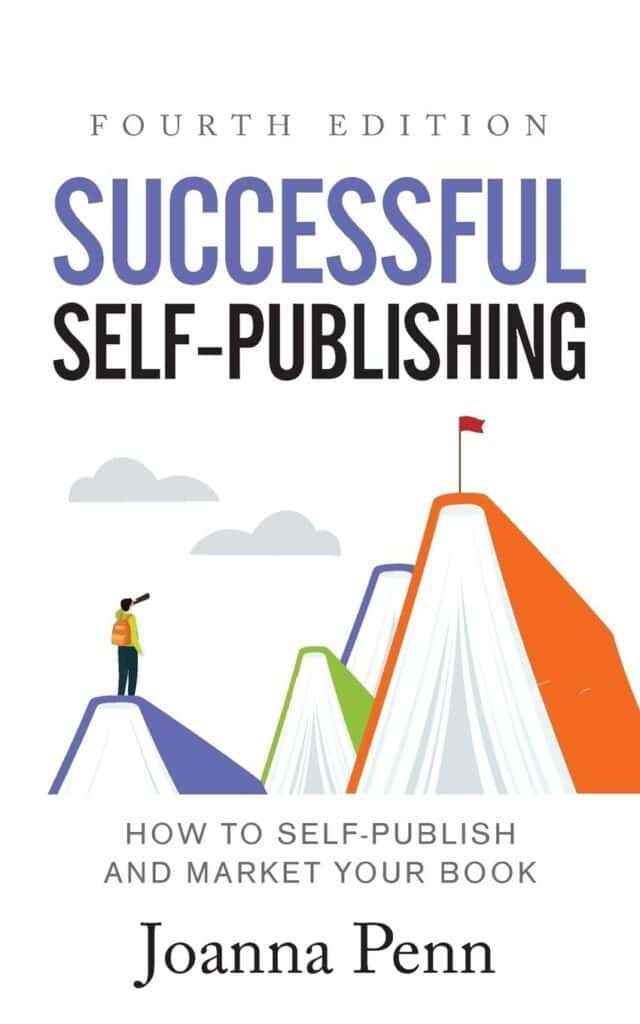
For Successful Self-Publishing (affiliate link) fourth edition, I run ads even though the ebook is free. It is a loss leader and building the skill has kept me from having to re-explain that every time. The context lives inside the skill.
You can build reusable skills for ongoing processes and use projects to group work by book or business area. I have a CEO Claude project that contains all my accounts and financial information.
I built my business on the back of the Kindle and the iPhone in 2007. That is when I became an author. I built through blogging, podcasting, and social media. Now, AI feels like the next wave. It is the technology I will build on for the next 15 to 20 years. It is exciting, and there is much more to come.
Can AI function as an assistant, a team or both?
Thomas: AI is moving from being a single assistant to being a team.
Previously, you had one AI persona, such as ChatGPT or Claude. Now tools like Claude and Grok 4.2 can spin up multiple agents that debate internally to seek the best answer. This is especially powerful for fact checking.
You can also create your own internal team. Imagine an SEO specialist, a copywriter, and a researcher, all working inside one AI system. Each has a different strength, and together they produce stronger output.
The productivity curve looks like a hockey stick. We are at the very beginning. Play with it. Experiment. But remember, you do not have to use AI to be productive.
We both know successful authors who reject AI entirely. They are professionals. They approach writing like work. Hobbyists avoid the boring tasks. Professionals file their taxes, review their numbers, and write business plans, even when it is not fun.
Being professional means doing the work that supports the writing.
Why is this an exciting time to be an author?
Joanna: This is the most exciting time I have seen in nearly 20 years as an author. I have been full-time since 2011 and earning multi-six figures income from my writing for more than a decade. I am more excited now than ever.
There are pros and cons to every technological shift. But the craft of being an author and the business of being an author are still fantastic. There is tremendous opportunity. If you have ideas and energy, this is a great time to pursue them.
Where can authors get more help building a professional author business?
Thomas: If you want help with the business side, listen to The Creative Penn. It is one of the longest-running indie publishing podcasts in the world and has a strong business focus. Joanna covers craft and marketing, brings on business-savvy authors, and opens each episode with industry news, including developments in AI.
Her Patreon includes a monthly Q and A episode where she answers listener questions. Our Patreon model was inspired by hers.
If you want to try my new Business Plan Generator, visit PatronToolbox.com. The Patron Toolbox includes dozens of tools to make marketing and promotion faster and easier. It is available to Novel Marketing patrons at the $10 level and up.
Featured Patron
Ryder Jones, author of Welcome to Westville
a supernatural thriller that plunges readers into a 1996 small-town nightmare where a missing girl’s disappearance tears open the fabric between worlds. Blending liminal dread, 90s nostalgia, and dimensional horror, this atmospheric page-turner delivers the small-town mystery of Twin Peaks, the supernatural tension of Stranger Things, and the cosmic terror of Stephen King for readers who crave stories that crawl under their skin and refuse to let go.
Related Episodes
- The Author’s Guide to AI with Joanna Penn
- How to Sell Books Directly to Readers with Joanna Penn
- Productivity Tips for Authors With Joanna Penn
Watch on YouTube

Great information. Thank you.
Irma