

This week in publishing and tech, the headlines are dramatic, but the real impact for authors is more nuanced.
Here’s what we’re covering:
- The Supreme Court strikes down Trump’s tariffs, but don’t panic. Your book prices are not about to spike or crash.
- Harlequin shuts down its historical romance line, effectively conceding ground to Kindle Unlimited authors who have reshaped the category.
- BookFunnel rolls out digital ebook signings with personalized voice messages for audiobooks potentially on the horizon.
- AI updates you need to understand, including:
- ElevenLabs pushing further into audiobooks
- A new Perplexity Pro trap flagged by the Nerdy Novelist
- Google’s emerging Web MCP standard, which could fundamentally change SEO as we know it
Let’s break down what matters, what doesn’t, and what smart authors should be watching right now.
Supreme Court Strikes Down Trump’s Tariffs
Jonathan: The Supreme Court has struck down Trump’s tariffs. In a six to three decision, the justices ruled that the International Emergency Economic Powers Act of 1977 does not give the president authority to impose global tariffs.
That said, it may not matter. Scott Besant said today, “We’re going to keep the tariffs. We’ll just find a different route.” This likely will not affect publishing. Books are considered informational material. At most, it might have affected paper prices.
Thomas: This was not much of a story when the tariffs were introduced, and it is not much of a story now that they are gone, at least for authors. It may affect other industries, but we thought we should mention it because there is a lot of noise surrounding tariffs.
For many people, tariffs function as a shibboleth for political affiliation. Most people do not understand how tariffs work, their history, or who ultimately pays them. You can often predict someone’s position based on whether they voted for the red team or the blue team.
That is especially true in publishing, where some are saying, “Tariffs are going to have a huge impact.” No. The quality of your book and the quality of your marketing will have a far greater impact. Tariffs are unlikely to affect you significantly either way.
They are also not inherently inflationary if you understand how inflation works. Pricing is a signal. Inflation is tied to the money supply, not simply to prices.
Sources:
- Supreme Court strikes down tariffs
- Supreme Court Strikes Down Trump Tariffs – offering book industry relief
- Supreme Court Strikes Down President Trump’s Tariffs
- Learning Resources, Inc. v. Trump – Justia Supreme Court
- How Trump’s Tariffs Affect Indie Authors – Self Publishing Advice
It’s Over: Harlequin Historical Romance Concedes Defeat as Indies Dominate Charts
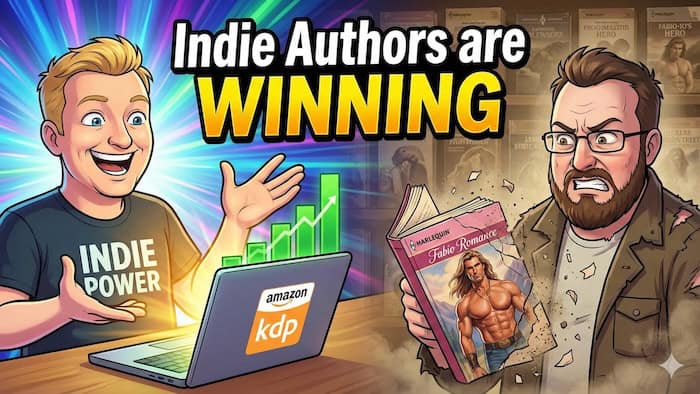
Jonathan: It’s the end of an era. Harlequin is closing its historical romance series in the fall of 2027 after nearly 40 years.
This line launched in 1988. It delivered monthly category romances set in past eras, featuring passionate heroes and detailed historical backdrops. I know an author who writes for this line, and the production schedule they required was intense.
They are likely making this move because indie romances now dominate the bestseller lists. Traditional publishers no longer control distribution and production pipelines. Through KDP, you can write your book, publish it, and if your metadata is strong and the algorithms connect you with the right readers, you can win.
Thomas: More than any other genre, romance is highly seasonal. Trends and tropes change quickly. Harlequin was one of the last major traditional players meaningfully competing in this space. They moved quickly by traditional standards, but still slower than many indie authors.
Trends would rise, peak, and begin to decline while traditional publishers were still acquiring authors, moving through editorial, and working through production. The two years it takes for a traditional publisher to acquire and publish a new book is an eternity on Kindle Unlimited time.
Traditional publishers kept getting squeezed out. This is not Harlequin’s first line to close. They lost their western romance line around 2017. Western romance is still strong, but if you look at the Amazon bestseller lists, they are dominated by indies.
This is the final stage of the battle between traditional and independent authors. Eventually, readers will be trained to look for indie books. Publishers do not have the brand. Readers follow authors. The authors making the most money are often indies because they earn more per book and sell more copies overall. They have far better funding than many traditional authors, which runs counter to the stereotype.
The idea of the traditional author backed by a wealthy publisher is often not accurate. Many publishers are financially strained and closing lines because they cannot compete.
Another major trend is pricing. Many traditional publishers have pivoted away from competitive ebook pricing. A typical traditionally published ebook may be priced at $10 on the low end and $15 to $18 on the high end. Those prices effectively hand the ebook market to indies. In romance, where many readers prefer ebooks, which means surrendering a large share of the market.
Jonathan: Romance readers are often budget conscious. I know readers who go to thrift stores, buy stacks of Harlequin books for $1.25 or $0.99 each, take them home, read them, and bring them back.
Thomas: Harlequin is uniquely exposed because it was the budget brand in romance. The mass market paperback with Fabio on the cover defined the brand in the 1990s. That model is no longer working.
This feels like the end of an era.
We may see more high-end romance, including special editions. Highly successful indie authors will sometimes sign deals with major houses for mainstream distribution. But the game is changing. The primary way to make money is as an indie author. Traditional publishing has become an optional side benefit. Financially, it is not necessary, though for some authors it may still be worthwhile if the offer is strong enough.
Jonathan: When it comes to brand recognition, Harlequin had one of the strongest brands in romance. It was the most recognizable name in the category. If they are stepping back, that says something about the power of the indie space.
Indie authors are not locked into a two-year schedule. They can pivot next month and write what the market wants.
Thomas: There are simply more options now. Harlequin might publish one book a month in a particular line. In the indie world, 50,000 books may come out in a single month. That volume allows books to be tailored much more specifically to individual reader preferences.
Harlequin still has other lines. I believe their Love Inspired line is still performing well.
Jonathan: They have shifted more into contemporary and crossover categories. We discussed this with HarperCollins, the move toward genre blending. Think romantic cozy fantasy and similar crossovers. That is where they are investing now.
Thomas: If there is legitimate good news for traditional publishers, not just spin, we will cover it. But what we have seen so far is a slow decline.
Sources:
- An Update on Harlequin Series
- Harlequin to Discontinue Historical Romance Line Harlequin Is Ending Its
- Historical Romance Line After Nearly 40 Years
- After 40 Years, Romance Publisher Harlequin to End Historical Romance Line
- Harlequin to Discontinue Historical Romance
- Harlequin Is Ending Its Historical Romance Line
- Harlequin will no longer publish Historical Romance books
- BoSacks Speaks Out: Romance Isn’t Dying, Harlequin Just Got Dumped
- 2025 Indie Author Survey Results
BookFunnel Rolls Out Digital Ebook Signing and Launches New Flexible Pricing Plans
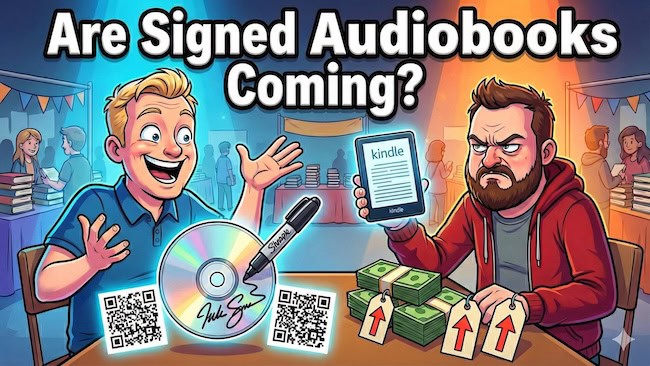
BookFunnel has rolled out digital ebook signing and launched new flexible pricing plans. The new plans are live today. You are not required to switch, but you may want to review them.
Jonathan: This tool works for both in-person events and virtual promotions. You set up a signing page or tip-in page, choose the titles you want to offer, and upload bonus artwork or special messages. You can customize it however you like. Readers scan a QR code that leads to a special link, and the book they receive includes the custom page.
I did some informal research and asked several readers whether they care if their ebook is signed by the author. Most said no.
Thomas: Did you ask if it was signed and personalized? There is a difference between a generic signature and a note that says, “Dear John, good luck,” followed by a Bible verse or a short message.
Jonathan: This system does allow personalization. But what are you going to do, create the tip-in page at your booth and then send it out?
Thomas: That is exactly how it works. You use an iPad with a stylus, write the message, and whatever you write becomes the customized page for that reader.
Jonathan: I am not booking a table where I can spend that much time creating a personalized ebook. When I sign physical books, it is faster. I do not have to upload anything or deal with venue Wi-Fi issues. I see potential problems.
What did impress me was the personalized voice message feature. That could be much faster.
Signed Audiobooks?
Thomas: The upcoming signed audiobook feature is exciting. Imagine an audiobook that opens with, “Hey Thomas, it was great to meet you at such-and-such conference. I hope you enjoy the book.” A quick message recorded on the author’s phone is scalable and can be recorded live or online. We will cover that when it goes live. I think that is even cooler.
Digital signing is also a strong way to sell ebooks at live events. The margin is high, and BookFunnel has been building technology around direct sales.
However, you will need your own internet connection. If you are relying on venue Wi-Fi, it can become a hassle. Consider adding tethering to your phone plan. With a laptop and battery, you can work anywhere, even at a park. It may not be peak productivity, but it is helpful, and in my case, worth the cost.
Jonathan: Some authors will definitely benefit from this. Adding exclusive art could justify an upsell. The personalization aspect is appealing. Still, at most in-person events, readers want physical copies. I often bundle the ebook for free with the print copy. That encourages them to create a Shopify account to download the book, which introduces them to the rest of my store.
Thomas: It also creates a strong anchor price. If the print book is $25 and the ebook is $10, you can present it as a $35 value. At the conference, they get both for $20. It feels like a bargain, and the ebook costs you almost nothing to deliver.
Jonathan: Someone in the chat suggested adding a photo with the author to the ebook. That could be interesting. The challenge is file size. Including photos can significantly increase the size of the ebook.
Thomas: That is a solvable problem. The image does not have to be large. BookFunnel may eventually add a built-in photo feature. This is likely where the market is headed.
BookFunnel’s new pricing includes a first-time author plan increasing to $30 per year, up from $20. The midlist author plan is also increasing. The new plans are more expensive overall. Before getting upset, remember that BookFunnel has not raised prices since launching for authors 10 to 15 years ago. There has been significant inflation during that time.
Jonathan: I did see a price increase. I was on the midlist plan, which included audiobook distribution during beta. When audiobook distribution became a separate feature, my price increased by $150.
Thomas: The new audiobook pricing is variable. For 99% of authors who are not selling many audiobooks, costs will likely go down. For the 1% selling large volumes, costs will go up. That makes sense. Delivering a 200-megabyte audio file to thousands of customers has real costs. Paying based on usage is fair.
BookFunnel is also handling the transition well by allowing authors to upgrade or stay on their current plan. That is the right way to implement price changes. Whenever I have raised prices, I have grandfathered existing customers at the old rate. I never want someone to regret buying earlier because the price later dropped.
Sources:
- Announcing Digital Ebook Signing: Connect with Readers in a Whole New Way
New Plans: More Pen Names, Cheaper Audiobook options, or Stay on Your Current Plan
BookFunnel Author Pricing Page - Create an Author Event and Digital Ebook Signing – Knowledge Base
- BookFunnel Pricing Page – Plan Details Including Ebook Signing Digital Ebook Signing Tutorial Video on YouTube
The Nerdy Novelist Exposes Perplexity’s “Pro” Trap for Authors

Jonathan: The Nerdy Novelist is a YouTube creator who focuses on helping authors use AI tools to improve their production pipeline. He reviews various AI models and approaches the topic with balance and discernment. I appreciate his perspective.
He has long recommended Perplexity Pro. Recently, however, he noticed a change in Perplexity’s terms of service. In summary, Perplexity has updated its TOS so that you cannot use outputs for commercial purposes unless you are on a commercial license, which is difficult for individual users to obtain.
Thomas: The Pro plan, which is marketed as “Pro” for professional, does not actually allow professional use.
Jonathan: Exactly. If you are using it to create something that could generate income, you may now be in violation. For example, if you ask it for Amazon advertising keywords based on a specific analytics report and use that output to make money, Perplexity says that is no longer allowed under the standard Pro plan.
The Nerdy Novelist said that if this remains the policy, he will stop using the tool because it is too restrictive.
Thomas: I had Jason Hamilton on the Novel Marketing podcast recently. He mentioned that he liked Perplexity because it allows access to multiple models and works well for research. With this new TOS, however, it becomes nearly unusable for authors.
Some may ask whether this affects the Patron Toolbox, since I use Perplexity in certain tools. The answer is yes, I use Perplexity, but not through the chat app. I use it through the API.
Every AI company offers two primary interfaces. First, the $20 per month chat interface, which includes restrictions, guardrails, and limited privacy. Second, the API, which is more flexible and designed for developers.
If you review Perplexity’s API terms of service, the commercial restrictions found in the chat app do not apply. You can use it commercially. You do not need to disclose that Perplexity was used. However, you pay per token instead of paying a flat monthly fee.
Jonathan: This may signal a broader trend. So far, AI has been something of a wild frontier for authors. Few restrictions existed on how outputs could be used. That may be changing.
We already discussed how ChatGPT is introducing advertising on its free plan. Now we see another monetization shift, where commercial usage requires higher-tier access. The cost of using AI in a professional capacity may increase.
Thomas: If you are using ChatGPT or Gemini for $20 per month, you should understand that you are currently receiving tokens at a loss. OpenAI and other companies are spending more than $20 per user per month to provide access. They are losing money on many users.
I know this because I pay directly for tokens in my own tools. For example, in my Not a Dev Editor tool, which analyzes full manuscripts, each interaction uses a significant number of tokens. Every time someone submits a query, it can cost me up to $1. If a user goes 20 rounds in a session, that may consume $20 in tokens. If usage is unlimited, I lose money.
Over time, prices will rise. These companies are currently prioritizing market share. They have discovered that once a user bonds with a particular AI platform, they rarely switch.
Jonathan: Like being locked into a cell phone plan.
Thomas: Exactly. Once someone commits, they tend to stay. Companies are absorbing losses to secure long-term loyalty.
We already see rising costs in software development. AI coding tools are so powerful that development firms are using hundreds of dollars in tokens per day. At $300 per day, that is roughly $8,000 to $10,000 per month. At that level, the cost approaches that of hiring a human developer. The assumption that AI is always cheaper may not hold in every scenario.
That said, intelligence is becoming more efficient over time. Costs may decrease in some areas even as pricing models shift.
Returning to Perplexity, if you want an alternative, I recommend Grok. I recently migrated the Comp Finder tool away from Perplexity.
Comp Finder reads your manuscript, analyzes it, and identifies comparable titles. Perplexity handled search well but struggled with deeper thematic analysis. Grok, on the other hand, excelled at analysis and performed nearly as well in search. It can scan dozens or even hundreds of webpages in seconds.
After switching to Grok, the tool improved significantly and became more cost-effective in terms of tokens.
I regularly test and switch between models to determine which performs best for each use case. Some Toolbox tools use Gemini. Some use Grok. Some use Perplexity. The goal is always to match the best model to the specific task.
Sources:
- Perplexity Terms of Service
- Perplexity API Terms of Service
- 6 Things You Need to Know About the NEW Perplexity Update by The Nerdy Novelist
- Reddit Post Detailing Pro Subscription Changes
Announcing Timothy Finder
I’ve just rebuilt the old Reader Profiler into a full Timothy Finder. You simply upload your book then it analyzes your writing and determines who your book would appeal to based on my episodes on the subject.
This tool will even tell you which of the American Regional Cultures would most resonate with your book.
It has a newer deeper connection to my podcast episodes than previous tools. It’s like asking AI Thomas to help you find your Timothy.
Instead of generating fictional personas or demographic profiles, it creates five Timothy
Sketches, each with a memorable name to help you picture the type of real person you should be searching for.
Each sketch includes:
- psychographic details (values, fears, hopes, frustrations)
- a list of comp titles they already love
- specific places to find them
- a conversation-opening question you can use when you meet them in person
It also identifies underserved reader segments. These are the readers other authors are ignoring, which is often where the biggest opportunity lives.
The most important thing to understand about this tool: it is a compass, not the destination. The sketches are starting points for your search, not replacements for a real Timothy. Fictional profiles are imaginary friends who always like what you write. The whole point of a Timothy is that you can talk to him, listen to his honest answers, and learn things that surprise you.
The tool will tell you which sketch to pursue first, where to go, and what questions to ask. Your job is to go find that real person and take them out for coffee.
Timothy Finder pairs well with:
- Comp Finder – Generate a list of similar books and authors.
- Trope & Genre Finder – Get a list of your book’s tropes along with a genre alignment score.
- Quotable Quote Finder – Find memorable lines readers will quote and share.
- Event Finder – Find nearby book fairs, conferences, and festivals where you can promote your book.
It’s Over: ElevenLabs Launches Complete Audiobooks Toolkit in ElevenCreative
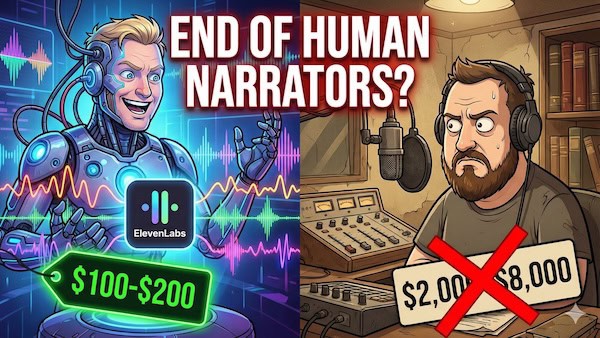
ElevenLabs launches a complete audiobook toolkit in Eleven Creative.
Is this the end for human narration?
Jonathan: On February 9, ElevenLabs announced a major platform upgrade. They are introducing audiobook production inside Eleven Creative. This feature gives authors and publishers a single workflow to turn manuscripts into finished audio projects.
You upload an EPUB file, and it generates instant narration. The full book can be produced in about five minutes using one of their 10,000 expressive AI voices. If you want more control, you can switch to studio mode and fine-tune the performance.
We have discussed ElevenLabs before. Their features are impressive. The cost ranges between $100 and $200.
Thomas: That is roughly an order of magnitude cheaper than traditional production. A typical audiobook costs between $1,500 and $8,000, depending on length and narrator. So, this comes in at about 10% of that price.
ElevenLabs could already generate narration. The key innovation is integrating everything into a single workflow. From what I can tell, it will not only narrate your book but also distribute it across multiple platforms automatically. That is the real breakthrough.
Readers generally prefer a human narrator over AI.
Some readers will prefer a multicast AI narration, especially if each character has a distinct voice. That may be more appealing than a single human narrator shifting pitch to differentiate characters.
Top-tier narrators are not at risk. Someone like Michael Kramer will not be replaced by an ElevenLabs voice. But a mid-tier narrator who can convincingly perform only three male voices and one female voice may now be competing with an AI product that offers more variety at 10% of the cost.
As more full-cast audiobooks enter the market, listener expectations will shift. There will be growing demand for full-cast productions from human teams as well.
My prediction about the audiobook market splitting into three tiers still holds, similar to what we see in print.
- The premium tier will be equivalent to a special edition hardback, featuring a full cast of human narrators.
- Mid-tier audiobooks will be similar to a trade paperback, with a single professional narrator. Think of a well-known voice such as Michael Kramer or even a celebrity narrator like Keanu Reeves.
- Finally, the budget tier will be equivalent to a mass-market paperback, consisting of AI narration.
That is where the market appears to be heading.
Sources:
- Create studio-quality audiobooks with ElevenLabs
- Introducing Audiobooks in ElevenCreative
- ElevenLabs, Valued at $11 Billion, ‘Doubles Down’ on Audiobooks
- How to make an audiobook using AI in 2026 Studio is now available to everyone
- Eleven v3: Most Expressive AI TTS Model Launched
Super Chat Question: Conservative Art
Jonathan: Kurtis Maximus says, “We love your channel. Question: Why do you think conservatives tend to be so bad at the creative arts? I read a Christian thriller book, and it was not very good, but Christians praised it.”
That is one book. I would not draw a conclusion about conservatives and the creative arts from a sample size of one. I do not doubt that the book was bad, but you would need to read a broader range before concluding that conservatives are bad at creative work.
Thomas: I will offer one reason that applies to both sides of the political spectrum. Sometimes people applaud creative work because of the sermon embedded in it.
They like the message and themes, so they do not care whether the movie or book is actually good. They approve of the worldview. The five-star reviews are for the sermon, not the storytelling.
You see this with explicitly progressive films that get praised for having “girl boss” themes or the right political message, even if the story is weak. You also see it in Christian circles, where a work is praised because it presents the gospel, regardless of craft.
Jonathan: Youth groups buying mass tickets to Left Behind is an example. It was not a great movie, but it received enthusiastic support.
Thomas: We may have judged the original Left Behind too harshly. Some of the later installments were worse.
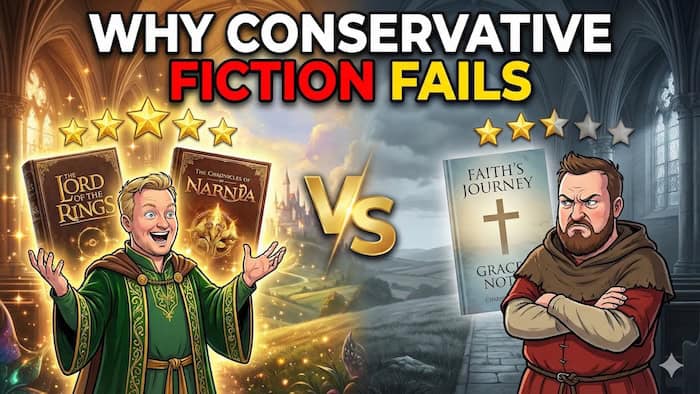
There is a more interesting version of this question: Why do Anglicans and Catholics seem to produce more enduring Christian fiction than evangelicals? In Christian fantasy, readers still celebrate The Lord of the Rings and The Chronicles of Narnia, written by a Catholic and an Anglican. There are fewer evangelical equivalents with that level of cultural impact.
I think part of the answer relates to the idea in the book of James that “we are justified by works and not by faith alone.” There is a narrative richness in stories where characters must work out their salvation with fear and trembling. You see that in The Chronicles of Narnia. You see it in The Lord of the Rings. Characters struggle, sacrifice, and change.
Stories built primarily on identity, whether progressive or conservative, tend to be less compelling. If what saves you is simply your identity, that is often boring. Watching a character wrestle, grow, and make costly choices is more interesting than watching someone who is already righteous by default.
James says, “We are justified by works and not by faith alone.” That tension between belief and action creates drama. Take it up with the Apostle James if you disagree.
Jonathan: There may also be a conflation here. You asked why conservatives are bad at the creative arts, but you cited a Christian thriller. That does not necessarily mean the author was politically conservative.
Thomas: Especially if the book was published by a Christian publisher. I have an episode of The Christian Publishing Show about this topic. Many Christian publishers would not publish someone like Charlie Kirk. In some cases, they are as ideologically progressive as secular publishers.
Jonathan: They are often more comfortable with agenda-driven fiction. That mindset is shaped by the professional networks they move in, the conferences they attend, and the conversations they have. Once you understand the ecosystem, it makes more sense. I do not even blame them in many cases. It is the environment they operate in.
Thomas: Did someone just Super Chat us into a zeitgeist segment?
Jonathan: Apparently so.
Thomas: If you want us to cover a specific topic, Super Chat is a great way to support the show and spark a discussion.
Google and Microsoft Just Gave AI Agents a Front Door to Every Website
Jonathan: We received a story from Author Update viewer Ted Ley, who flagged something that flew under the radar last week but could reshape how readers discover our books.
I am going to introduce some terms, then explain what they actually mean.
Google’s Chrome team quietly published a blog post announcing something called Web MCP, which stands for Web Model Context Protocol. In simple terms, it creates a standardized “handshake” or translation layer for AI bots that visit your website.
You will still have a front-facing website for human readers. But until now, AI bots have used a convoluted process to interpret websites by analyzing text and visuals as humans do. That approach consumes many tokens and increases cost because AI systems are trying to simulate human perception.
Web MCP aims to solve this by creating a machine-readable layer that explains, in structured form, what is on your site. It gives the AI a version of your page written in “robot language,” so it can understand content more efficiently.
This is not live yet and likely will not be for some time. But when optimizing your website for AI, you will eventually need to consider protocols like this. There may be multiple standards from different browsers. I suspect tools such as Yoast SEO will introduce plugins to make this easier. They have already begun addressing agentic search and know this shift is coming.
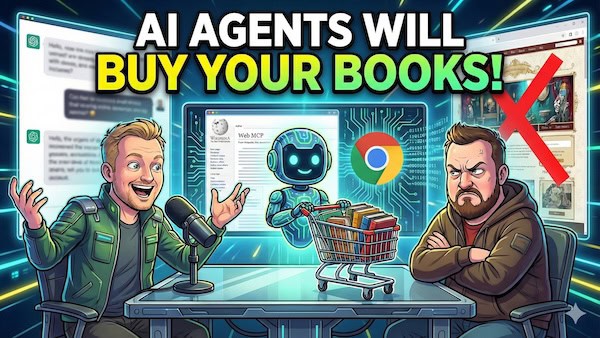
AI will increasingly send agents to your website to evaluate products and potentially make purchasing decisions.
Thomas: Not just make decisions, but actually complete purchases. That is where things are headed. For tech-savvy users, this is already happening. Within six months, your grandmother may be doing it too.
You will tell your AI assistant, “Go research this and buy it for me,” and it will do so. It functions as a personal shopper.
AI can process websites now, but modern design complicates that process. Fancy graphics and heavy JavaScript make sites harder and more expensive for bots to parse. In many cases, the simpler and more structured your site is, the more bot-friendly it becomes.
Bots prefer something closer to Wikipedia. They do not need animation and visual effects.
Jonathan: Your site should have a clear hierarchy and well-defined headings. That structure makes it easier for AI systems to understand your content.
Google’s New Pomelli Photoshoot Feature Lets Authors Turn Book Covers into Professional Marketing Images With Three Clicks
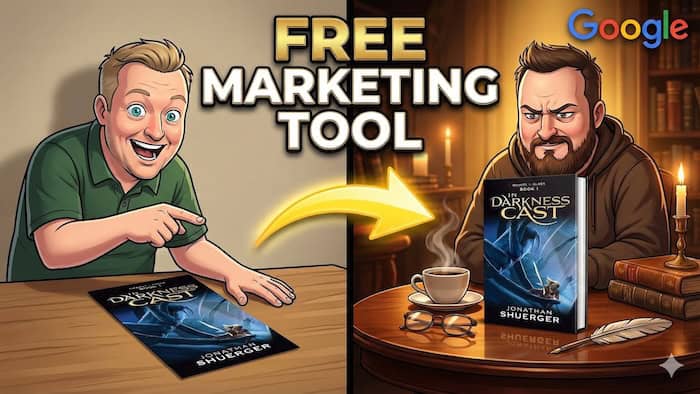
Jonathan: Google has introduced a new feature called Photo Shoot inside Pomelli, a free marketing tool from Google Labs. It allows authors to turn their book covers into professional marketing images with just a few clicks.
You upload an image of your book cover or a quick photo of the physical book. The AI generates high-quality studio and lifestyle images that look like they came from a professional photo shoot. You can use them immediately for Amazon ads, Facebook campaigns, or other promotions. This is the kind of work many authors previously did with Book Brush or Canva.
The tool essentially creates a product photo shoot for your book. The AI determines positioning and staging.
I tested it on two books. First, I used a book by Camille Elliot, a patron and listener of the show. I backed her Kickstarter for a premium hardcover. I took a simple phone photo of the book on a chair. It was not a great picture, but I tried to capture the sprayed edges.
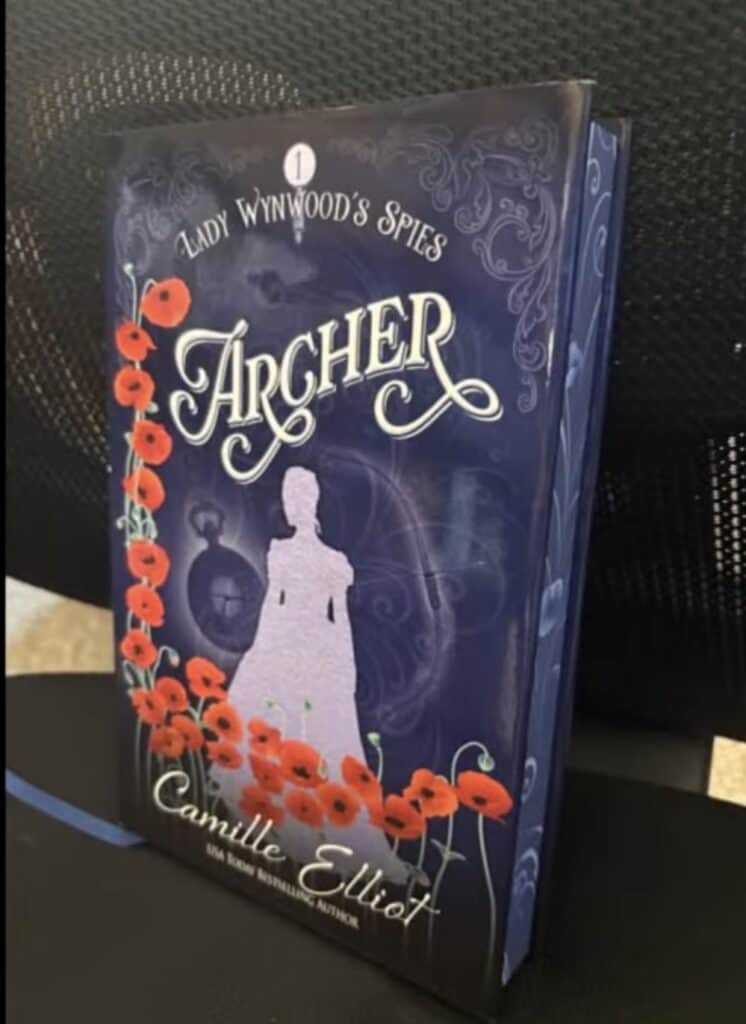
Within two minutes, the AI generated multiple scenes. It placed the book on a table, in a reader’s hands, and against a styled backdrop.

I could prompt it further. For example, I told it to add a cup of coffee to a scene with glasses and a pen, and it added one. It did miss the sprayed edges. I did not test whether a prompt would correct that, but it might.
However, the more interesting use case involves 2D covers. Many of you, especially if your book is not yet released and you are running a Kickstarter, only have a flat, 2D cover from your designer.
So, I downloaded a 2D image of Jonathan’s book from his website and ran it through the tool. It generated scenes with the book on a table, against a clean background, and in themed environments. One scene even resembled a Father’s Day setting.
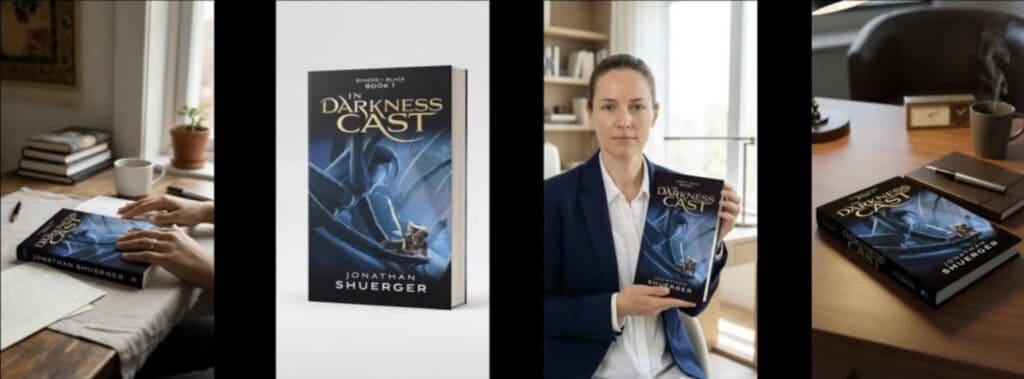
At first, the model presented the book to a generic reader. I felt that did not match Jonathan’s target reader. So, I prompted it: “Change the person to a Marine veteran who fought in the Great War on Terror.” The image updated. The figure now had a Marine lapel pin and subtle battle scars.
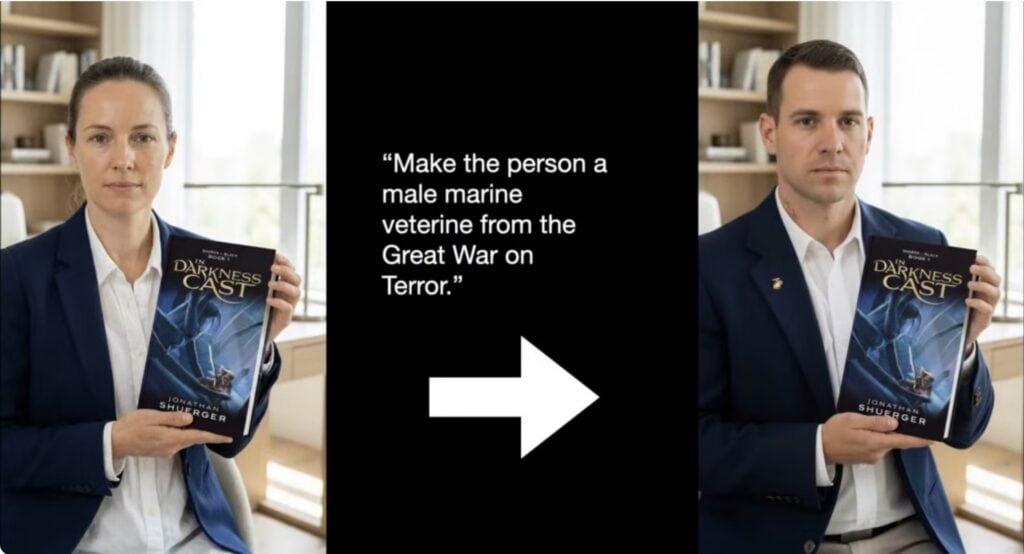
All I did was upload the 2D cover and add a short prompt. The result could easily be used in a Kickstarter campaign or in ads. It is a remarkably powerful tool.
I once considered building something similar for the Patron Toolbox, but it was too expensive. I am glad I did not. Google is currently offering this for free. It may not remain free forever, but for now it works exceptionally well.
You can place your 2D book into various settings and experiment with advertising angles. I did not test whether you could adjust book dimensions, such as shortening a spine or converting paperback to hardcover, but given the strength of Google’s image engine, I suspect small tweaks are possible with prompts.
Jonathan: Rather than changing the physical appearance of the book, I would focus on use cases. The current images are presentation-focused, which feels like a direct sales pitch.
Instead, imagine a Marine in camo sitting against sandbags in Afghanistan, rifle propped between his knees, reading the book during a quiet moment before patrol. That is a natural use case. Those shots are difficult to capture in real life. You can ask readers to share photos, but you cannot always coordinate that. If you can stage it convincingly with AI, that becomes very useful.
Thomas: Another built-in use case is seasonal positioning. You can place your book in a holiday setting and subtly communicate that it makes a good gift. A Mother’s Day scene, a Father’s Day scene, or a Christmas table with cinnamon sticks and hot cocoa. A fall-themed setting suggests it is a perfect autumn read. That kind of contextual marketing can be powerful.
Jonathan: The more work you do for the buyer, the better. If you show the product in its natural setting, you remove friction from the buying decision.
Super Chat Question: Pomelli Photoshoot Feature Use Case
Jonathan: Jayna says, “I just uploaded my flat cover to free, and it gave me a mockup of an 18th-century man reading my American Revolution novel.”
That is a perfect use case. You can even depict characters from your book reading your book.
Thomas: Grok offers similar capabilities. The tool we have been discussing uses Google’s Gemini model, sometimes referred to as “Nano Banana.” Grok also allows you to animate your book cover. For example, if your cover features Marines fighting zombies, Grok can animate that scene.
While creating thumbnails for this episode, I uploaded one of ours and it animated Jonathan and me. It did not know our voices or the show context, but it inferred from the books behind me that we were discussing books. The result was not perfect, but with added context, these tools can perform surprisingly well. A book cover already contains strong contextual signals, which improves the output.
Jonathan: These tools are excellent for marketing, but also for engagement. In Darkness Cast was released in 2020. If I created an animated version of the cover where Gideon smacks a spider with a copy of In Darkness Cast, readers would find that funny. You could build small viral moments within your audience. That kind of engagement supports SEO and keeps readers invested.
Thomas: Tiffany asked to see the animation. I may upload it to Author Media Social. We have a community there with a dedicated space for Author Update. All clips are posted there. If you remind me, I will share it.
Sources:
- Create studio-quality marketing assets with Photoshoot in Pomelli
- Google’s Pomelli Photoshoot Feature is Here to Hammer Nails into the Coffin of Photography
- Google Is Quietly Building a Free Marketing Suite
- Google Pomelli 2.0 on Product Hunt
Three Major AI Releases This Month Give Authors Powerful New Options
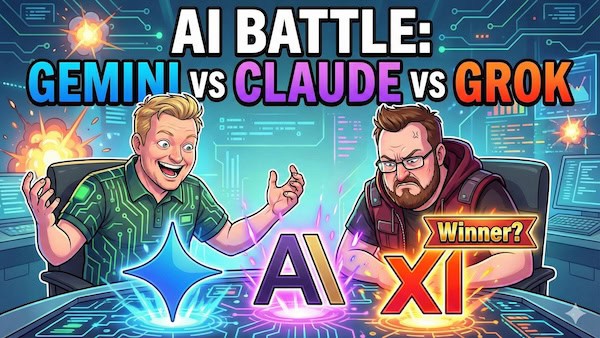
Thomas: There has been a surge of updates in AI tools.
Google has released Gemini 3.1 Pro, and Anthropic has released Claude Sonnet 4.6.
Gemini 3.1 Pro is more capable at the same price point and is currently leading many benchmark tests. If you are using Gemini 3, upgrade to 3.1 Pro. It is a step up across the board. I have already begun testing it with some of the Toolbox tools.
Claude Sonnet 4.6 remains the same price on the surface, and if you are using the Claude app, you are likely not paying extra. However, behind the scenes, it uses significantly more reasoning tokens than 4.5. That effectively increases cost, so monitor your usage carefully.
The most significant release this week is Grok 4.20. It represents a shift in how AI systems operate. Instead of interacting with a single agent, you interact with a coordinated team of agents.
Grok 4.20 is currently in beta and available only to paying users. It is not yet accessible through the API, so you must use it at grok.com.
When you submit a question, multiple agents analyze it, conduct research, and debate the answer. Grok functions as the coordinator and mediator. Harper serves as the research and facts expert. Benjamin focuses on logic, mathematics, and code. Lucas specializes in narrative structure and readability.
These default personas collaborate to produce a synthesized response. You can also prompt them individually.
For example, I created a Grok project focused on health. I assigned Harper the perspective of an allopath, Benjamin the perspective of an osteopath, and Lucas the perspective of a naturopath. Each analyzes questions from a different medical philosophy. They debate the issue and Grok provides a synthesized conclusion. Because different schools of medicine approach problems differently, this multi-agent debate produces nuanced answers.
If you have access to Grok Heavy, you can run up to 20 simultaneous agents.
Up Next: Join the Patron Q&A with Tax Expert Seth Norris
Normally, I answer publishing and marketing questions from patrons during our Patron Q&A. For the upcoming session, I will first be joined by Seth Norris, the CPA I interviewed on Novel Marketing recently.
We will begin by answering tax questions for authors. If you are preparing your taxes and have questions about how tax law applies to authors, this is your opportunity to ask.
There is no additional cost to ask a question, but you must be a patron to access the live Q&A. All patrons will have access to the replay. You can join live, ask your question directly, and then stay for the second portion of the session. After Seth finishes addressing tax questions, I will remain to answer publishing and marketing questions.